
What Coaches Check Before They Ever Watch a Swing
Junior World Golf Championship fills tee sheets this week. Here's the part of recruiting that gets decided before a coach watches a single swing.
This week, while the Junior World Golf Championship fills tee sheets at Torrey Pines, something less visible is already deciding who gets recruited and who doesn't. It's not the swing. It's the transcript.

It sounds harsh to say out loud, but most golf parents find out the hard way. A junior golfer can have a beautiful short game, a tournament resume full of solid finishes, and a swing that turns heads on the range, and still get passed over because nobody asked the academic question early enough. College coaches aren't just building a roster of low handicaps.
They're managing a program that has to follow real eligibility rules, and a recruit who can't clear that bar simply isn't one they can sign, no matter how much they want to.
That's the part of recruiting that happens quietly, long before a coach ever sees a swing on video. And it's exactly why we put academics first in our pathway, not as an afterthought, but as the actual starting point.
The Transcript Test
Here's where it gets specific. NCAA eligibility isn't judged on GPA alone; it looks at core coursework and grades together, and the requirements differ slightly by division.

We've watched genuinely talented players lose real opportunities over this, almost always because nobody caught the issue early enough to fix it, and by the time it surfaced in a recruiting conversation, there wasn't enough runway left to correct it.
That's why our recruiting pathway starts with academics, not the golf swing. We call it Academic Arsenal, and it breaks down into three deliberate steps.
Building the Roadmap Before Junior Year
The first step is charting the course, academic planning and GPA optimization that starts well before junior year. Freshman year is when course selection should already be aligned with where a student wants to land academically, not just whatever feels easiest at the time, and it's also when test prep exposure should begin quietly in the background, even informally, so the SAT and ACT don't feel like a sudden crisis later.
Most families wait until recruiting conversations are already happening to ask whether grades and course load line up with what competitive programs expect. By then, there's often very little room left to fix a gap. Starting the plan freshman year buys years of runway instead of months.
When AP Classes Aren't on the Table
The second step is mastering the challenge: the SAT, ACT, and AP-level expectations. This is where local school limitations cause the most stress. Not every high school offers a deep bench of AP courses, and that puts some golfers at a real disadvantage compared to recruits from schools with more options.
The fix isn't complicated, but it takes planning. Outside coursework, taken strategically rather than randomly, and timed around tournament season instead of competing with it, can close that gap without burning a student out during peak competition months.
Why a Crowded Resume Backfires
The third step is going beyond the books. The instinct is to join every club, every committee, every volunteer opportunity available, on the theory that more activities equal a stronger application. Coaches see right through it.
A short list of activities where a golfer shows real, sustained leadership, say, running a junior golf clinic for younger players for two years straight, tells a much better story than a long list that signals nothing but busywork. One meaningful role beats five forgettable ones, and it gives a player something genuine to talk about when a coach asks who they are beyond their scorecard.
Mary Didn't Choose Between Golf and Grades
We've watched this play out with real families, and Mary is a good example. She came to us as a freshman, a 9-handicapper at the time, and her family treated academics and golf as one combined plan from the start, not two separate tracks competing for the same hours.

She went on to become the #1 ranked player in Golf Canada, earned a spot at Indiana University, finished a master's degree there, and won an event on the Epson Tour in 2024. None of that happens if the academic side falls behind while the golf game races ahead. The two grew together because the plan treated them that way from day one.
Questions Parents Ask Us About This
Do coaches really check GPA before recruiting talks go far?
Yes, often earlier than families expect. Academic standing affects eligibility, so it tends to come up well before an offer is on the table, sometimes in the very first conversation.
My golfer's school barely offers AP classes. Is that a dealbreaker?
No, but it does need a plan. Outside coursework can fill that gap, as long as it starts early enough to make a real difference by recruiting season instead of being a last minute scramble.
Can a golfer recover if their grades slipped during a heavy tournament season?
In most cases, yes. It just means rebuilding the plan now rather than later, and being honest about the gap instead of hoping it goes unnoticed.
The Real Takeaway
Junior World is a great showcase of what's possible on the course. Let it be a nudge to check the other side of the ledger too. If a coach asked for your golfer's transcript today, would it match the level of their golf?
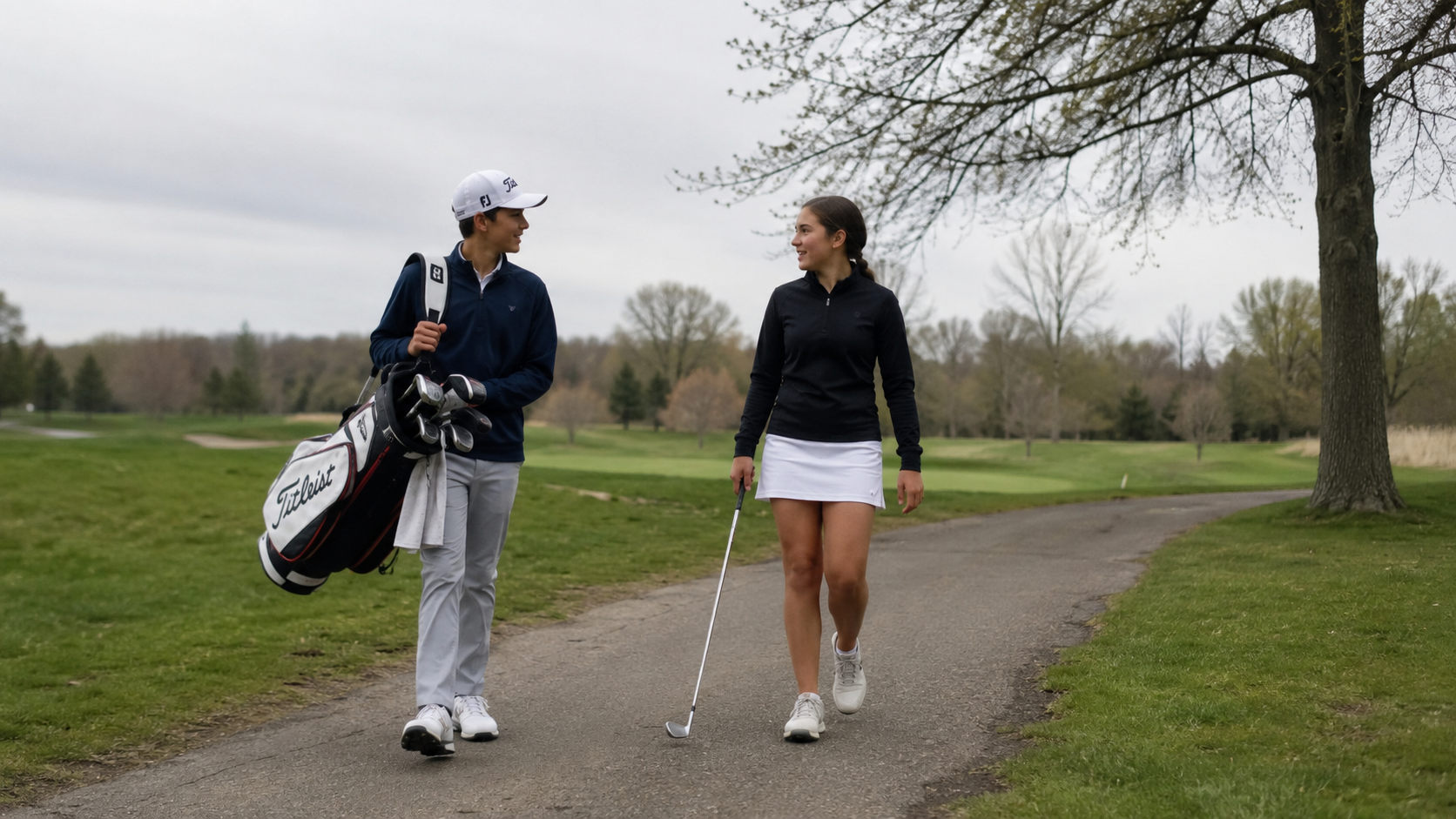
If you're not sure, that's exactly the kind of gap that's fixable now and much harder to fix later.
Don't wait until the coach asks. Reach us at 844-935-GOLF or book a strategy session, and we'll map out exactly where your golfer stands academically and what to fix first.
