
What Happens Between the Range and the Roster Spot
Every swing at the Junior World Golf Championship this week looks effortless on camera. What the cameras don't show is the year of decisions that got each player there.
It's tempting to watch a junior golfer flush iron after iron and assume they were simply born with it. Some of that is real talent, no question. But talent on its own plateaus fast.
Plenty of naturally gifted junior golfers get stuck around the same scoring average for years, while others who started with less raw ability keep climbing, tournament after tournament.
The difference almost always comes down to what happens off camera: the practice plan, the schedule, and the coaching behind it.
We call that side of things Golf Mastery, and it isn't one thing. It's three systems working together, each one doing a job the others can't.
It's Not Talent, It's a Target
Most junior golfers practice hard. Far fewer practice with a clear target. Our Golf Tier System breaks competitive golf into seven measurable areas, short game, long game, mental game, fitness, knowing and applying the rules, qualitative practice, and applying a strategy for course management, instead of leaving "get better" as a vague goal.

Each area gets its own benchmarks, things like up-and-down percentage from inside fifty yards, fairways hit under tournament pressure versus on the range, or how a player actually reacts after a bad hole, so a player and coach both know exactly where the next two weeks of work should go.
That's a different experience entirely from hitting more range balls and hoping something improves.
The Tournament Trap Most Families Fall Into
Tournament selection is where a lot of strong junior golfers quietly waste a season. Playing the same circuit every year out of habit, instead of choosing events that match a player's current skill level and stretch them in the right direction, means a player can rack up a full summer of entries and still have nothing new to show a coach. Play too far below their level and there's nothing to prove.
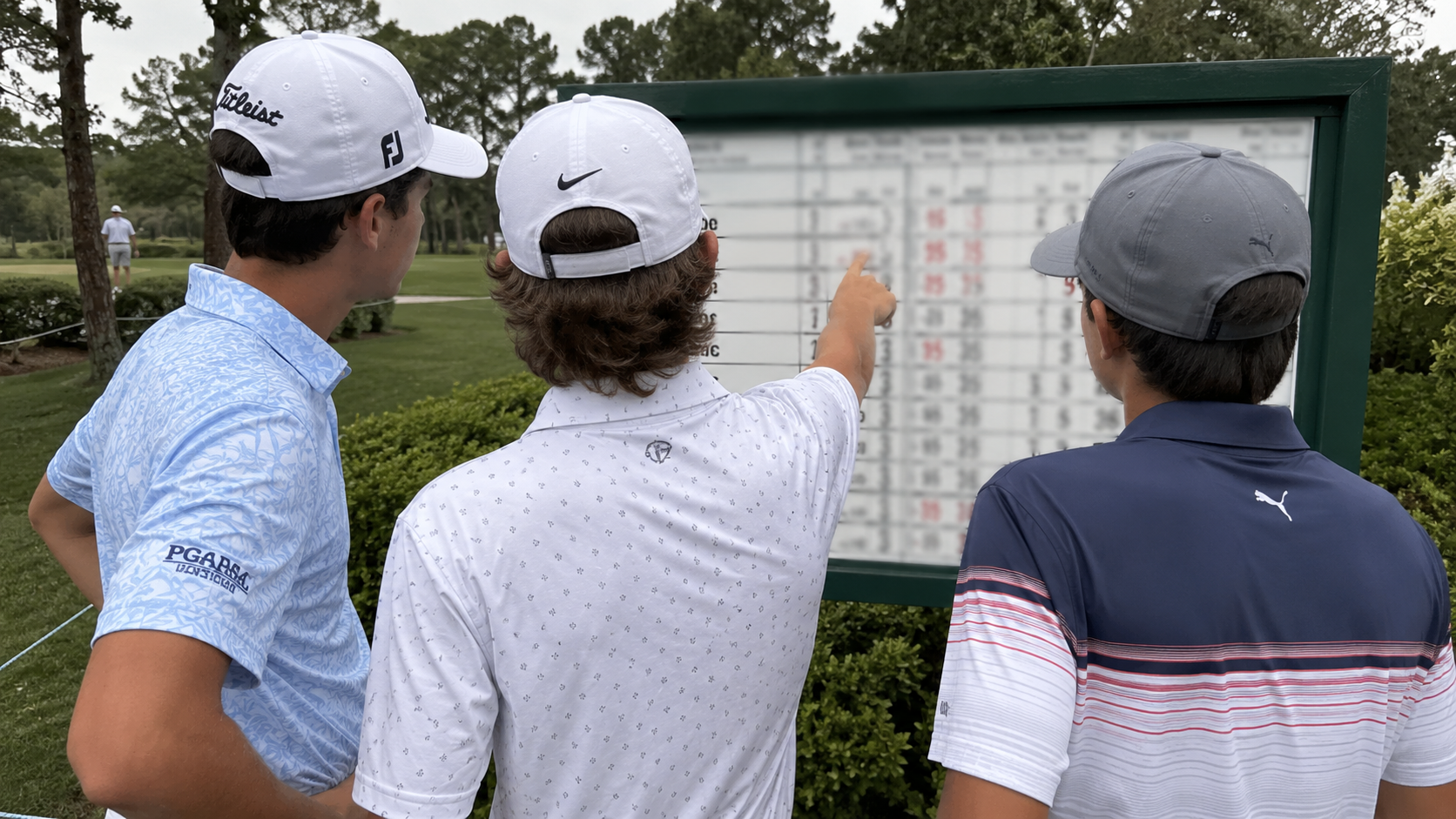
Play too far above it too soon and a player can spend a whole season just trying to survive the cut, with no real data on actual improvement either way. Building a schedule on purpose, stepping up gradually as benchmarks are met, is what creates real, visible proof of progress. This intentional approach has helped three of our athletes earn spots on Team Canada's National Team.
What Golf Parents Want to Know
How many tournaments should a junior golfer play each season?
There's no fixed number. What matters is whether each event is chosen to test or prove something specific, like a new tier of competition or a particular weakness, rather than just filling out the calendar.
What exactly is the Golf Tier System?
It's a structured way of improving by building on existing skills. Develop a practice session with a clear purpose instead of being random.
Can a player switch coaching systems midway through high school?
Yes, and it's common. The earlier a player adopts a structured system, the more time it has to compound, but starting in grade 10 or 11 still leaves real room to improve before recruiting season.
Before You Go
Remember that the swing is just the visible part. The players who go on to play in college are usually the ones whose practice, schedule, and coaching are all pulling in the same direction, long before tournament week, quietly, over years most people never see.

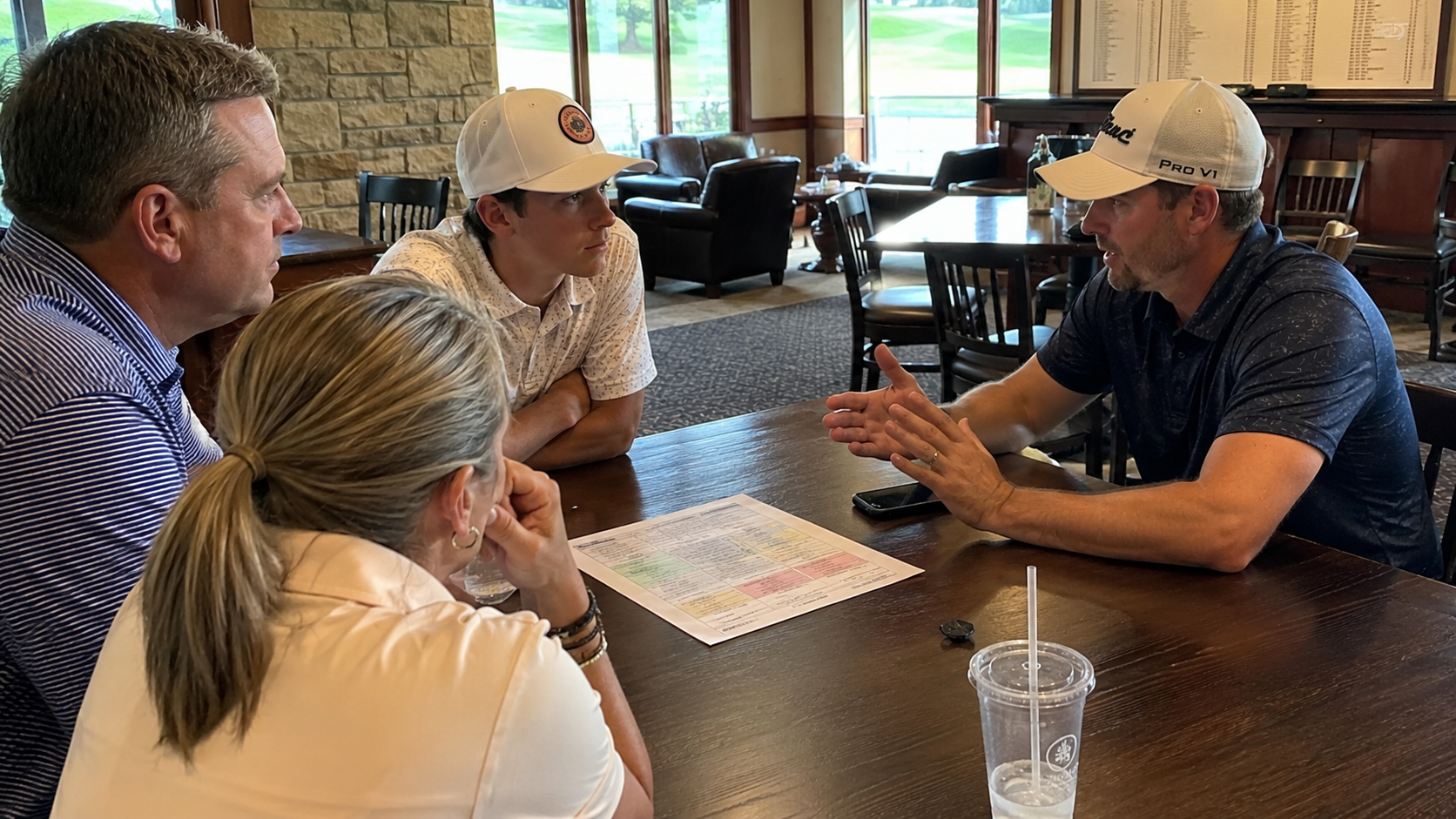
If your golfer's game has plateaued, don't wait for a tournament to tell you something's off. Book a strategy session, and let's take a real look at where your golfer's game stands today.
